How Does Play-Based Learning Prepare Your Child for School?

For many parents, the transition from nursery to “big school” can feel daunting. You might wonder if the joyful, play-filled days at nursery are truly preparing your child for the more structured world of formal education. At Teddy Bear Nurseries, we’re here to reassure you: play is not the opposite of learning; it is the foundation of it. A high-quality, play-based curriculum is the most powerful preparation we can give your child for school success.
Let’s explore exactly how the purposeful play in our nurseries builds the critical skills your child needs to thrive in their next educational chapter.
1. Building the Foundations for Literacy and Numeracy (Without Worksheets!)
Play seamlessly integrates early academic concepts in a way that feels natural and engaging.
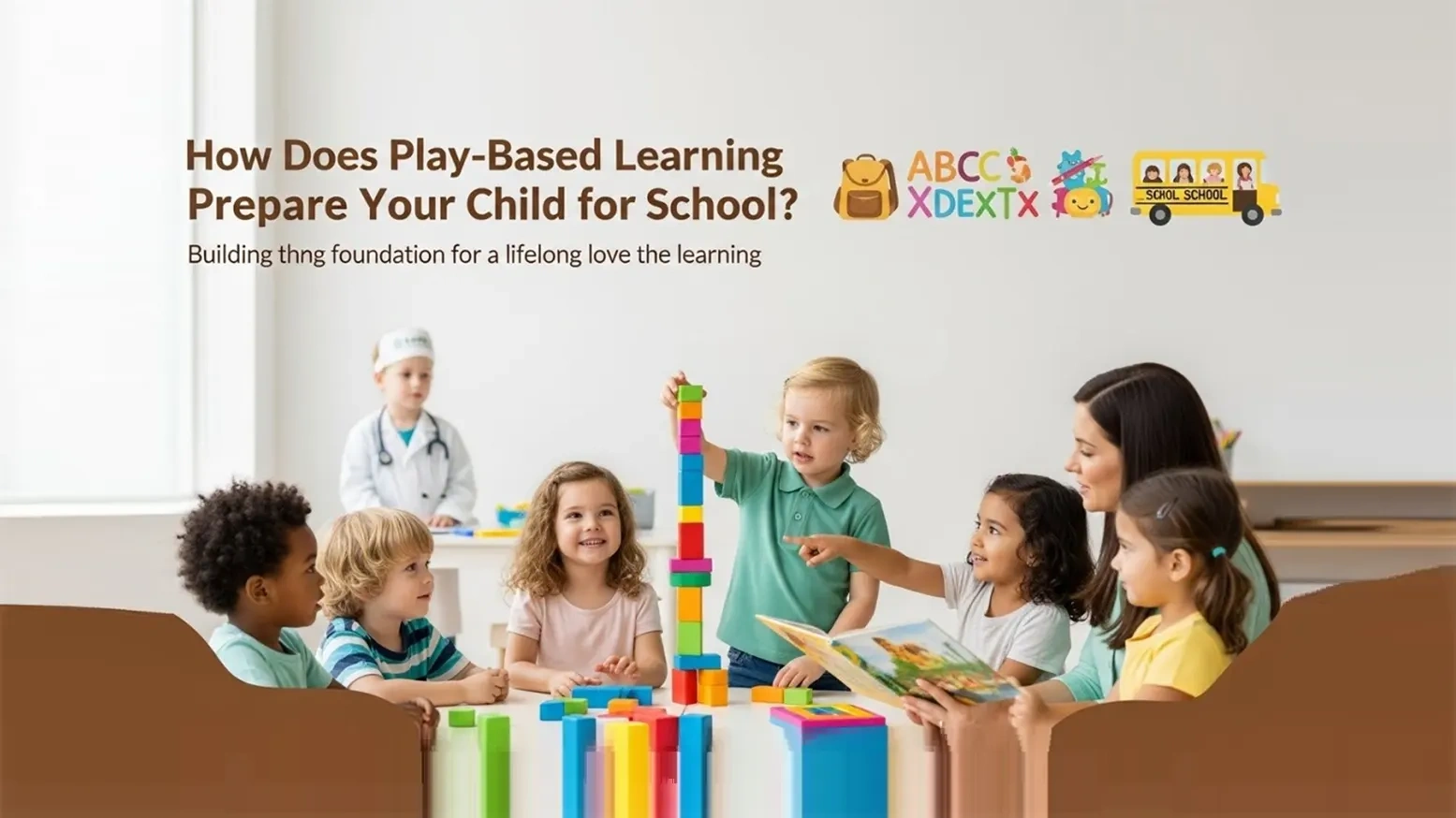
- Language & Literacy: When children engage in role-play—running a café, caring for stuffed animals, or building a spaceship—they are storytelling, negotiating roles (“You be the customer, I’ll be the chef”), and expanding their vocabulary. Sharing picture books, singing rhymes, and describing their creations all build phonological awareness and communication skills, the direct precursors to reading and writing.
- Early Maths: Sorting coloured blocks, counting out cups for a tea party, recognising shapes in construction, or measuring sand in a bucket—these are all authentic mathematical experiences. Play teaches concepts like quantity, size, pattern, and sequence in a meaningful, memorable context.
2. Developing Essential Cognitive Skills: Focus, Problem-Solving & Creativity
The structured school day requires sustained attention and flexible thinking. Play is the ultimate training ground.
- Concentration: A child deeply engrossed in completing a complex puzzle or building an elaborate Duplo tower is practising focused attention. This self-directed engagement builds a stronger capacity for concentration than passive, adult-led instruction.
- Problem-Solving & Critical Thinking: “How can I make this tower taller without it falling?” “Why won’t the water wheel turn?” “How do we share these four crayons between three friends?” Play presents endless, low-stakes problems, encouraging experimentation, resilience (“it’s okay to try again”), and innovative thinking.
- Creativity & Imagination: In a world that increasingly values innovation, the ability to think creatively is paramount. Open-ended play resources like loose parts, art materials, and dressing-up clothes allow children to imagine, invent, and see possibilities—the very heart of creative thought.
3. Fostering Social-Emotional Readiness: The Key to a Happy School Experience
Academic skills are only one piece of the puzzle. A child’s ability to manage emotions, collaborate, and communicate is arguably more critical for a smooth school transition.
- Self-Regulation: Through play, children learn to manage frustration, take turns, wait, and cope with not always getting their way. A game with rules (even simple, child-made ones) teaches impulse control—a vital skill for classroom learning.
- Collaboration & Teamwork: Building a den together, putting on a show, or playing a group game requires sharing ideas, listening, and working toward a common goal. These are the foundations of successful classroom collaboration.
- Independence & Confidence: In our play-based environment, children make choices (“What shall I play today?”), manage their own belongings, and take on challenges. This fosters a strong sense of agency and self-belief, so they enter school feeling capable and ready to learn.
4. Cultivating Physical Skills for the Classroom
School requires physical competence, from sitting comfortably on the carpet to holding a pencil and managing buttons at toilet time.
- Fine Motor Development: Playdough, threading beads, using tweezers in a sensory tray, and manipulating small bricks all strengthen the tiny hand muscles essential for pencil grip and control.
- Gross Motor Skills & Coordination: Climbing, running, dancing, and navigating playground equipment build core strength, balance, and coordination. A physically confident child is more ready to focus on learning.
How Teddy Bear Nurseries Bridges the Gap to School
Our approach is intentional. We don’t just “let children play”; we are skilled facilitators who observe, support, and gently extend learning through play.
- School Readiness Programmes: In our pre-school rooms, we subtly introduce more structured group times and routines that mirror school, all within a playful context.
- Partnership with Parents: We provide clear insights into your child’s development and share practical strategies to support the transition at home.
- Focus on ‘Learning Dispositions’: We prioritise nurturing curiosity, resilience, and a love of learning—traits that will benefit your child far beyond the first day of school.
The Final Word: Play as the Ultimate Preparation
School readiness isn’t about recognising every letter or writing their name. It’s about being a confident, curious, and communicative learner who can listen, ask questions, make friends, and bounce back from a challenge.
At Teddy Bear Nurseries, our play-based curriculum is meticulously designed to build these very capabilities. We are preparing children not just for the first term of school, but for a lifelong journey of learning—and we do it through the joyful, powerful, and essential work of play.
Ready to see how our purposeful play prepares children for school success? Book a tour at your local Teddy Bear Nursery and witness the learning in action.